Physical Address
304 North Cardinal St.
Dorchester Center, MA 02124
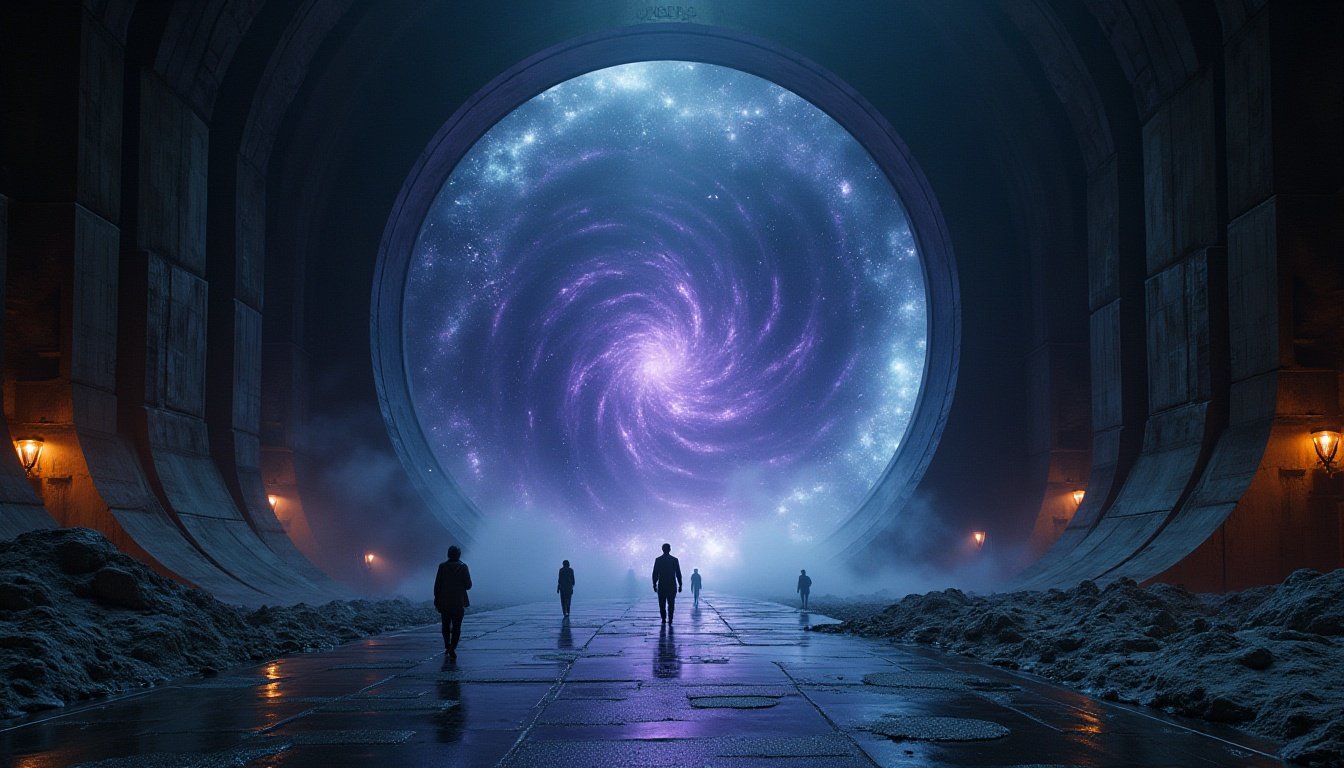
The Mandela Effect: why so many people remember a different version of reality
By Joe Garner | The Garner Report
There is a peculiar kind of uneasiness that comes from discovering the past does not look the way you remember it. A familiar movie scene loses its punch line. A childhood character looks slightly wrong. A detail you would have sworn was there has apparently never existed.
Then someone else says they remember it your way, too.
Suddenly, a private lapse becomes a shared puzzle, and the search for an explanation takes a stranger turn.
That is the attraction of the Mandela Effect: shared memories that clash with the documented record. For some, it is a fascinating quirk of the mind. For others, it raises a much stranger question. Has something changed?
The phrase is closely associated with writer and paranormal researcher Fiona Broome. According to her account, a conversation at Dragon Con in 2009 revealed that other people shared her recollection of Nelson Mandela dying in a South African prison.
Broome remembered more than a passing headline. She described memories of funeral coverage, public mourning, and a speech by his widow. She initially assumed she had misunderstood the news. Discovering others with similar recollections prompted her to explore the subject and popularize the name “Mandela Effect.”
The historical record tells a different story. Mandela was released from prison in 1990, became South Africa’s president in 1994, and lived until December 5, 2013.
Broome’s website gave people a place to compare their own conflicting memories. Soon, the discussion reached far beyond one political leader and into films, advertising, cartoons, and the small details of everyday life.
Consider Dolly, the blonde woman who captures the heart of Jaws in the 1979 James Bond film Moonraker.
Jaws has metal teeth. Dolly smiles at him. Some viewers distinctly remember her revealing braces, creating a visual connection between the unlikely couple. It is the detail they say made the joke work.
Yet the familiar footage shows no braces.
The dispute was already being discussed by Bond fans in 2016, when one blogger published an inquiry to actress Blanche Ravalec’s representatives. That exchange documents how strongly people remembered the scene differently. It does not establish that the movie was altered.
But you can understand why that particular memory sticks. The remembered version has a satisfying logic. Two smiles, two mouths full of metal, and an instant attraction.
Picture the Monopoly mascot. Top hat, mustache, formal clothes. Did you also give him a monocle? That is a widely reported addition to the familiar character’s standard appearance.
Now imagine Pikachu. Some people remember a black tip on the yellow tail, although that is not part of the familiar design.
Then there is the Fruit of the Loom logo. People describe remembering the fruit arranged in front of a cornucopia, the horn-shaped basket associated with harvest displays. The cornucopia is precisely the disputed detail.
These examples are small enough to seem trivial until one collides with your own certainty. At that point, the conversation becomes personal: how can something so familiar feel so wrong?
Scientists have investigated that question. A 2022 University of Chicago study found that people could make the same specific errors when remembering familiar images, sometimes with considerable confidence. Some errors also appeared when participants drew the images from memory.
The research supported the existence of a shared false-memory pattern. It did not demonstrate that history had changed, and the researchers did not identify one explanation that accounted for every example.
Memory is not a recording we simply replay. Expectations, associations, and information encountered afterward can influence recollection. People exposed to similar images and stories may also make similar mistakes. Online repetition complicates the picture further: encountering an altered image today can make it difficult to identify where a later recollection began.
Alternative explanations range from parallel universes and overlapping timelines to suggestions that CERN’s particle experiments have disturbed reality. These are speculative interpretations, not established findings. No demonstrated evidence links the Large Hadron Collider to rewritten history.
That does not make the experience of a conflicting memory less unsettling. It does mean that a vivid recollection and proof of an altered universe are different things.
For me, the most interesting part is the moment before an explanation arrives. You recognize something, discover a contradiction, and feel your confidence slip. We depend on memory to tell us who we are. Discovering its limits can be a mystery in itself.
Before checking your next example, write down what you remember. Then examine the earliest reliable record you can find. Give the memory a fair hearing, but give the evidence one as well.
Which Mandela Effect do you remember most clearly—and what would it take to change your mind?
You be the judge.
Sources
• Fiona Broome, original account of the 2009 conversation: https://mandelaeffectsite.wordpress.com/2010/09/09/nelson-mandela-died-in-prison/
• Nelson Mandela Foundation, biography: https://www.nelsonmandela.org/biography
• Contemporary Dolly discussion and inquiry, February 2016: https://www.jamesbondthesecretagent.com/2016/02/did-blanche-ravalec-where-brances-in.html
• University of Chicago, visual Mandela Effect study: https://news.uchicago.edu/story/visual-mandela-effect-false-memories-psychology-neuroscience-pikachu-mr-monopoly-waldo
• University of Chicago, false memories explained: https://news.uchicago.edu/explainer/false-memories-explained
•
CERN, Large Hadron Collider and safety information: https://home.cern/science/accelerators/large-hadron-collider/