Physical Address
304 North Cardinal St.
Dorchester Center, MA 02124
Physical Address
304 North Cardinal St.
Dorchester Center, MA 02124
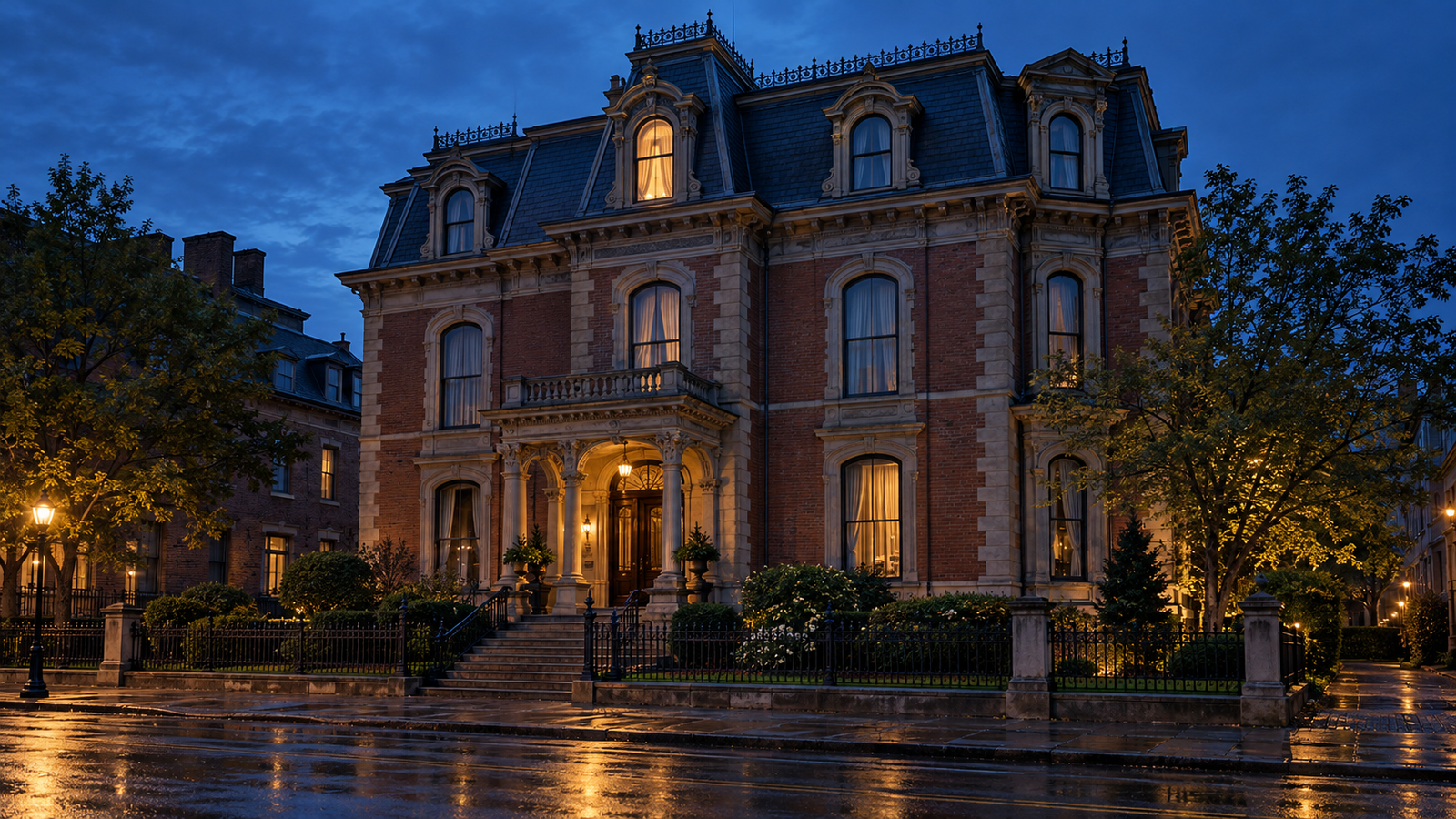
Investigators explained many of the strange sounds inside Binghamton’s last surviving Mansion Row residence. A few unsettling moments refused to disappear so easily.
By Joe Garner | The Garner Report
The grand houses that once lined Court Street in Binghamton, New York, have nearly all vanished.
One remains.
Built in 1870 for businessman and former Binghamton mayor Sherman D. Phelps, the Phelps Mansion rises three stories above the city behind a façade of brick and stone. Its marble floors, black-walnut staircase and soaring ceilings preserve the elegance of a neighborhood once known as Mansion Row.
But visitors have not come only for the architecture.
For years, people inside the mansion have reported unexplained footsteps, shadowy figures and the unnerving sensation that an empty room is not truly empty. Some believe members of the Phelps family never entirely left the house.
In September 2026, veteran paranormal investigator Jason Hawes and members of the Atlantic Paranormal Society entered the mansion to see what remained after the ghost stories were stripped away.
The investigation began with the building itself.
Old houses move, settle and breathe. Loose windows allow drafts to cross rooms. Aging pipes and walls carry sounds far from their source. Electrical wiring can produce electromagnetic readings that appear mysterious until the source is located.
Those ordinary conditions can make a historic mansion feel alive.
Before attempting to communicate with anything unseen, the investigators toured the property, reviewed its history and recorded baseline temperature and electromagnetic readings. Cameras, digital audio recorders and environmental monitors were placed throughout the rooms most often associated with reported activity.
Then the lights went out.

The team conducted listening sessions on the main floor before moving into the mansion’s upper rooms.
Some suspicious noises did not remain mysterious for long. Drafts moving through the original windows reproduced certain sounds. Other unusual readings were traced to the building’s aging electrical infrastructure.
Those explanations mattered.
A paranormal investigation does not become weaker when something is debunked. It becomes more credible when investigators are willing to remove ordinary causes from the case.
But the mansion did not surrender every answer.
During electronic voice phenomenon sessions, the team recorded sounds that Hawes said did not correspond with voices or background noise identified inside the building. One recording appeared to contain a direct response to an investigator’s question.
The team checked the surrounding conditions and considered possible interference. Several captures were dismissed or explained.
A small number remained unresolved.
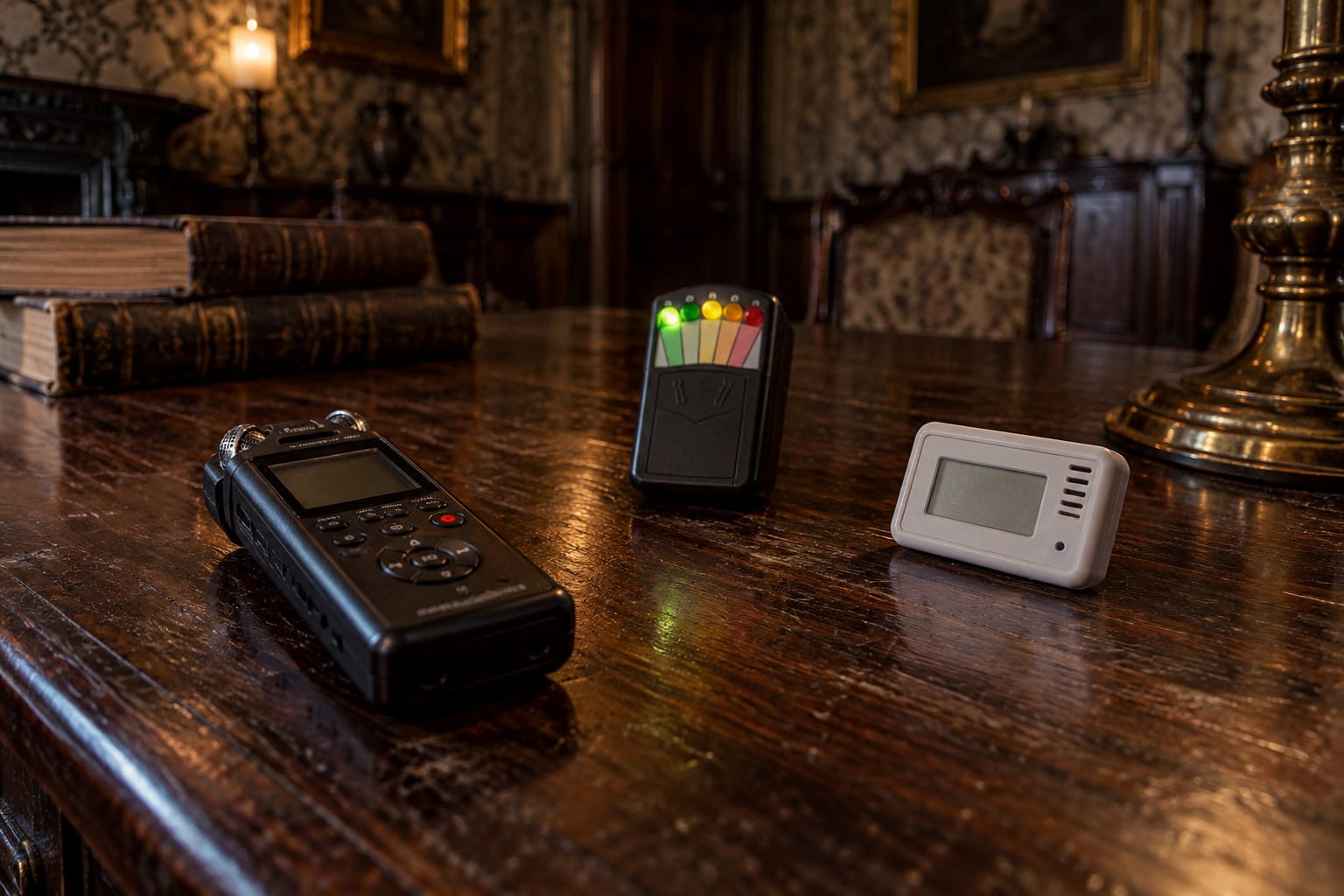
Paranormal Investigation Tools
Investigators also documented unusual environmental changes in one section of the mansion.
Temperature and electromagnetic readings reportedly shifted in ways that did not match conditions elsewhere in the building. The team checked the area for drafts, mechanical sources and electrical interference but did not identify an immediate cause.
That does not prove a spirit altered the room.
Environmental equipment records changes—not ghosts. Without repeated testing, an unexplained fluctuation remains exactly that: unexplained.
Still, combined with the audio captures and the mansion’s long history of reported experiences, the readings gave the investigators reason to look again.
The Phelps family did not remain the mansion’s only occupants.
In 1905, the property became the home of the Monday Afternoon Club, a women’s organization devoted to education, philanthropy and social causes. The club owned the building for more than a century.
Today, the restored mansion operates as a museum. Its rooms host tours, exhibitions, performances and historical programs. The museum also acknowledges the building’s haunted reputation through special tours and scheduled paranormal investigations.
More than 150 years of footsteps have crossed its floors.
Whether any of those footsteps continue after the visitors leave is another question.
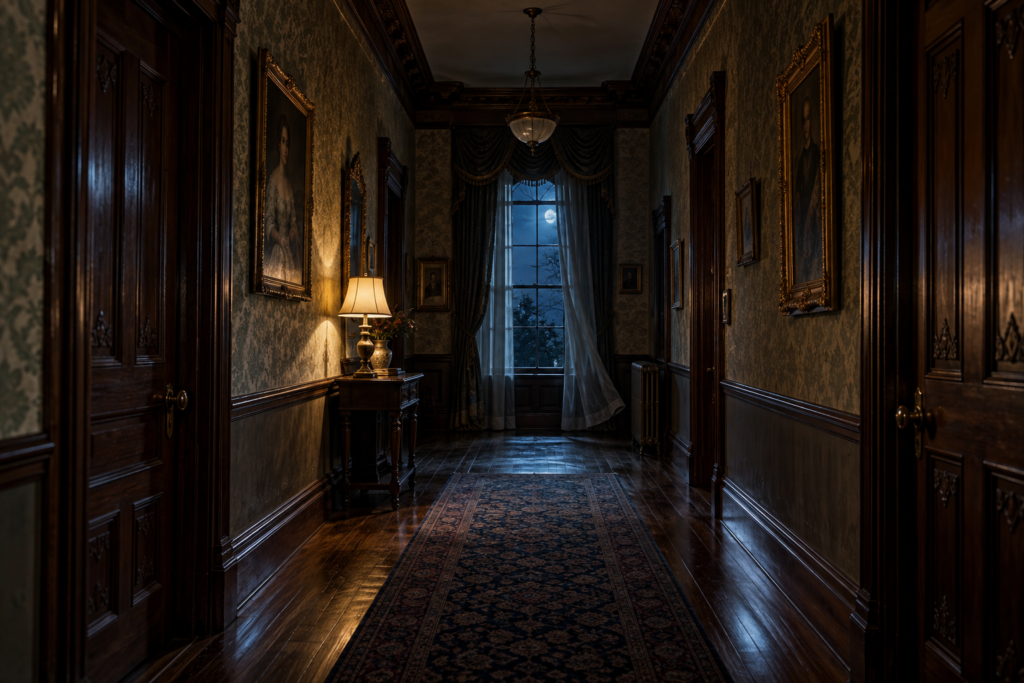
Hawes stopped short of declaring the Phelps Mansion haunted.
That restraint may be the most interesting part of the investigation.
Much of the activity commonly associated with an old haunted house—strange noises, drafts and fluctuating electromagnetic readings—was traced to natural or structural causes. The investigation did not produce undeniable proof of an apparition or a voice from beyond.
What it produced was uncertainty.
A handful of audio recordings could not be confidently matched to a source. Environmental changes remained unexplained after investigators checked the most obvious causes. The evidence was not enough to close the case, but it was enough for Hawes to recommend returning.
The last mansion on Mansion Row has survived changing owners, changing neighborhoods and more than a century and a half of history.
Most of its noises have explanations.
A few do not.
And somewhere inside those preserved rooms, something may still be waiting for the investigators to return.
You be the judge.
Primary references: Jason Hawes investigation and the Phelps Mansion Museum’s official history.