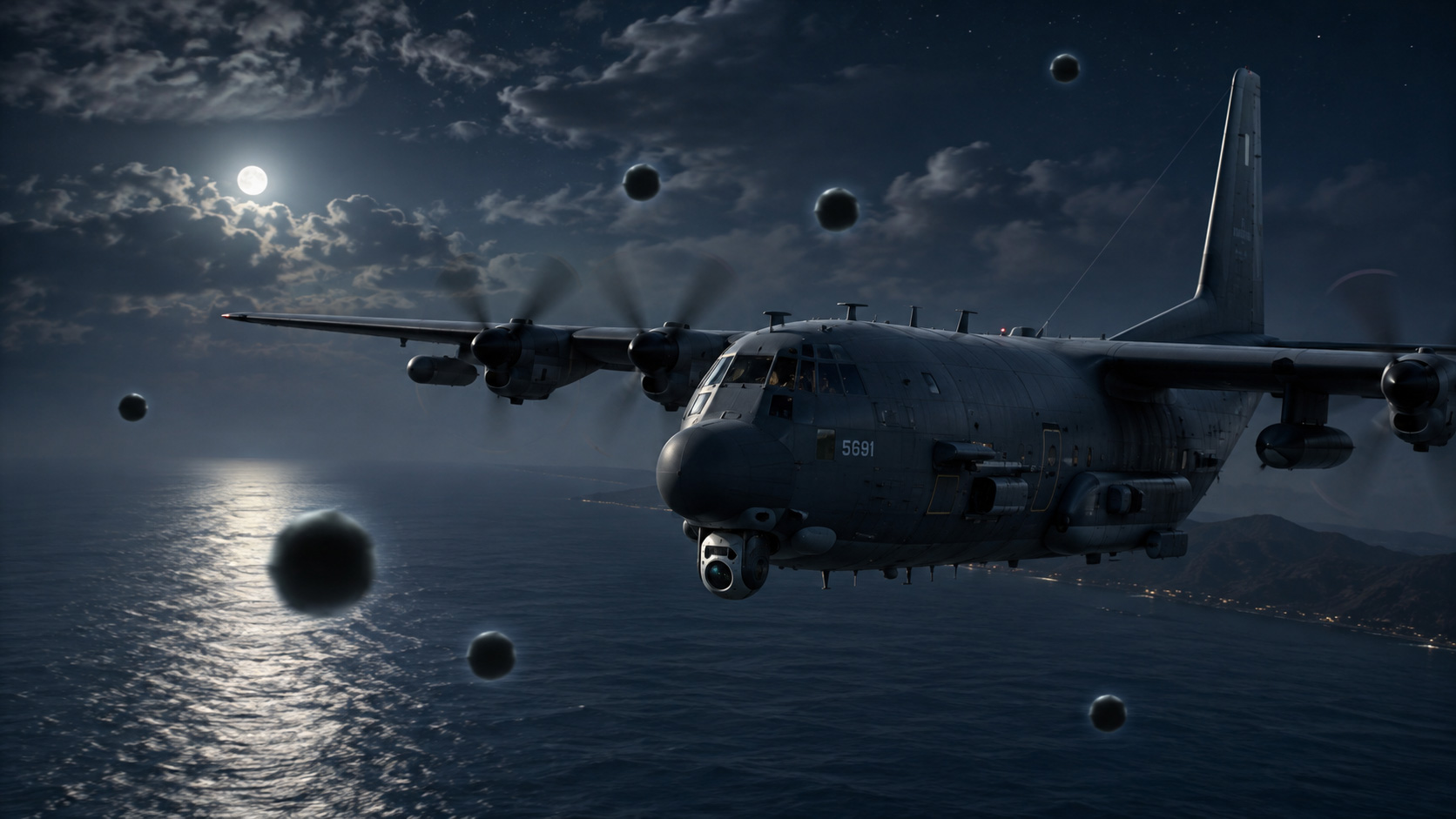
cold orbs over gulf

Cold Orbs Over the Gulf

Military Gunship Crew Reports 25 Unidentified Objects During Gulf of Oman Live-Fire Exercise

Newly released government records and infrared footage document an unresolved 2021 encounter in which a U.S. AC-130J crew tracked dozens of unidentified “cold orbs” during a training mission.

By Joe Garner | The Garner Report

AUGUST 13, 2026 — A routine military training mission over the Gulf of Oman turned into one of the most unusual UAP encounters to emerge from the U.S. government’s latest document release.

According to newly declassified records released through the Pentagon’s PURSUE archive, the crew of a U.S. Air Force AC-130J Ghostrider gunship reported observing approximately 25 unidentified aerial objects during a live-fire exercise on September 8, 2021.
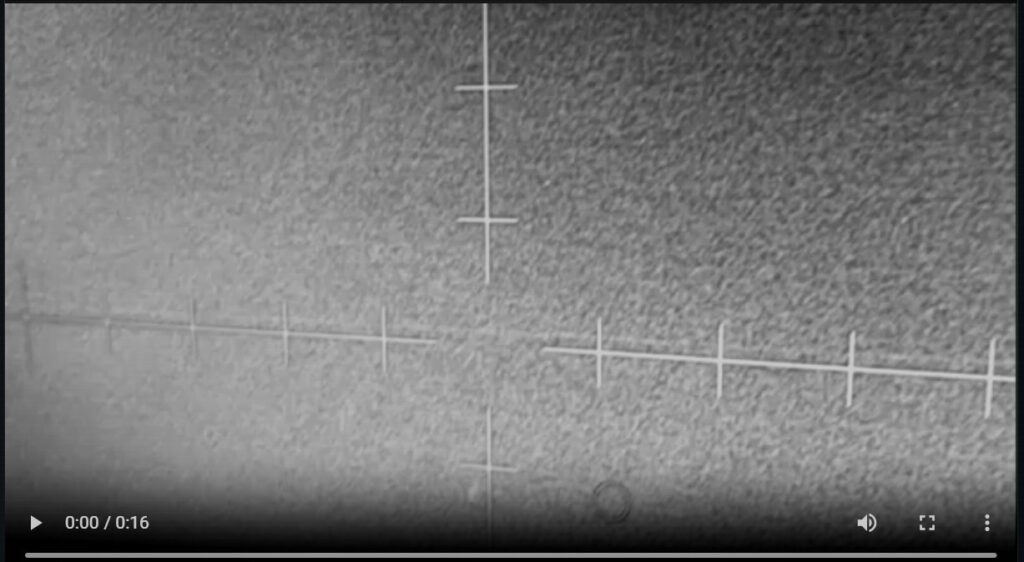
The objects, described in an accompanying intelligence report as “cold orbs,” were detected using the aircraft’s infrared targeting system while the crew conducted nighttime operations over the Gulf of Oman.

The incident remains officially unresolved.

A Night Training Mission Takes an Unexpected Turn

The AC-130J Ghostrider is one of the U.S. military’s most sophisticated gunships, equipped with advanced electro-optical and infrared sensors designed to detect and track targets in darkness.

According to the released intelligence report, crew members began observing multiple unidentified objects appearing on their infrared displays during the exercise.

Investigators documented approximately 25 separate observations over the course of the mission.

The report estimates the apparent speeds of the objects between 250 and 1,300 miles per hour, although those figures depend on assumptions about the objects’ distance and altitude—information that cannot be confirmed from the publicly released material alone.

What Are “Cold Orbs”?

The term “cold orb” refers to how the objects appeared through the aircraft’s infrared sensor.

Unlike hotter objects such as aircraft engines, missile exhaust, or vehicles, these objects reportedly appeared cooler than their surroundings, producing dark, rounded signatures on the infrared imagery.

That description alone does not reveal what the objects actually were.

Infrared imagery records heat differences rather than visible-light details, meaning a conventional object can sometimes appear unusual depending on environmental conditions, viewing angle, and sensor settings.

Video DOW-UAP-PR117
Video DOW-UAP-PR117

Along with the intelligence report, the government released six infrared video clips associated with the encounter.

One important limitation deserves mention.

According to the government’s documentation, the publicly available videos are recordings of the aircraft’s sensor display, not the original native infrared data recorded directly by the targeting system.

While still valuable, this means analysts are working with a second-generation copy rather than the highest-quality evidence available.

A Curious Detail

Among the more intriguing observations contained in the report is the timing of two of the unidentified objects.

According to investigators, the objects reportedly left the sensor’s field of view around the time the AC-130J fired its 105-millimeter cannon during the training exercise.

Some observers have suggested this indicates the objects reacted to the gunfire.

The released documents do not establish that conclusion.

They simply document the sequence of events as observed by the crew.

Whether the timing represents coincidence, sensor limitations, or something else remains unknown.

Why This Case Matters

Unlike many UAP reports circulating online, this incident comes with a documented military chain of custody.

It includes:

  • An official government intelligence report.

  • Multiple military witnesses aboard the same aircraft.

  • A defined date, location, and mission.

  • Six government-released infrared videos.

That combination makes it one of the more substantial cases included in the latest PURSUE release.

At the same time, the evidence has important limitations.

The publicly released videos are not the original sensor files, and the available information does not allow investigators to determine exactly what the objects were.

For that reason, the case remains officially classified as unresolved.

The Bottom Line

The Gulf of Oman encounter illustrates both the strengths and weaknesses of today’s government UAP disclosures.

The public now has access to military witness accounts, official documentation, and supporting imagery that would have remained classified only a few years ago.

Yet even with those materials, definitive answers remain elusive.

Were the “cold orbs” advanced drones, atmospheric effects, sensor artifacts, or genuinely unidentified aerial objects?

The government has not reached a conclusion.

Neither should we.

For now, the evidence remains open to examination.

You be the judge.

Primary Sources

Leave a Reply

Your email address will not be published. Required fields are marked *